
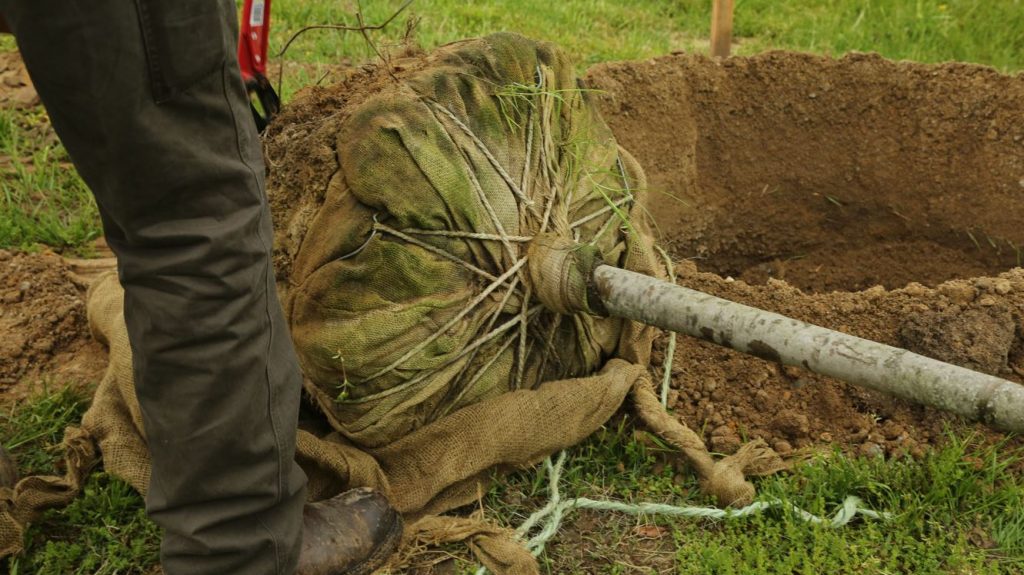
If you have been waiting for the right moment to plant a native tree, that moment is now. Autumn is widely considered prime planting season across our region. As cool air lowers the demand on foliage, the soil retains its warm summer heat, encouraging young roots to expand before the ground freezes. By planting in the fall, your tree gets a head start on establishing its root system well before summer heat arrives.
Planting a native tree is one of the most impactful investments you can make for your property and local wildlife. To learn more about how yard-scale planting connects local wildlife corridors or why native species power our regional food web, feel free to explore our posts on habitat fragmentation and the vital role of keystone species.
Success in growing a healthy native tree comes down to four critical phases: assessing your site, making an informed species choice, properly preparing and planting the root system, and providing long-term care.
Step 1: Let the Site Choose the Tree
Before you head to a local nursery or order a sapling, take a close look at the physical realities of your yard. The most common mistake landowners make is picking a tree simply because they like how it looks, without checking if the planting site can support its mature size.
- Measure Available Space and Utilities: Look up and look down. Check for overhead power lines and underground utility pipes. As a general rule, any tree planted directly beneath overhead utility lines should have a mature height of under 20 feet (such as a Flowering Dogwood or Redbud) to prevent drastic, disfiguring utility pruning later in its life.
- Use Solar Positioning to Your Advantage: Think about how sunlight moves across your house. Planting deciduous shade trees on the south or west sides of your home blocks the intense afternoon sun during summer, lowering cooling costs. In the winter, after those leaves drop, the sun shines through to help warm your home naturally.
- Check Soil and Drainage: Dig a small test hole and fill it with water to see how quickly it drains. Dense, compacted soils or areas that hold standing water require species adapted to wet roots. Planting a species that demands dry, well-drained soil in a low, soggy spot is a leading cause of early tree death.
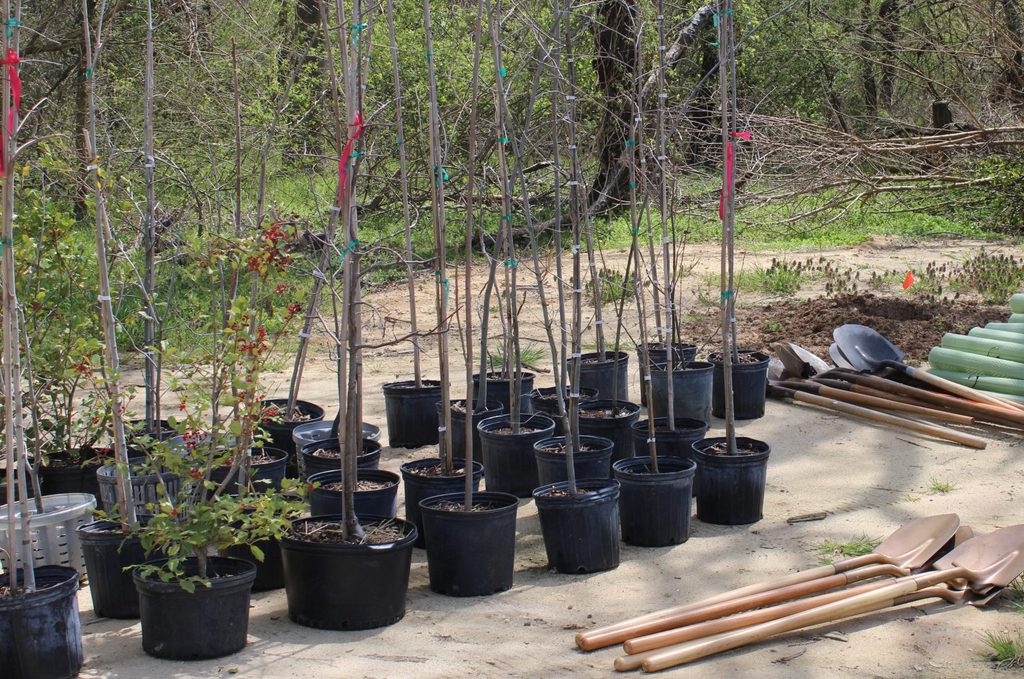
Step 2: Choose Native Trees with the Future in Mind
Not all native trees face the same future. Climate projections for our region indicate that over the coming decades, we will experience warmer average temperatures and heavier, more intense rainstorms. At the same time, native species face varying levels of stress from introduced pests and diseases.
To give your tree the best chance of long-term survival, filter your options using two main criteria: high wildlife value and climate adaptability.
- Focus on Keystone Natives: Certain native trees serve as ecological powerhouses. Native oaks (Quercus), maples (Acer), and hickories (Carya) support hundreds of species of native caterpillars, beneficial insects, songbirds, and mammals. Placing these species in your landscape forms the baseline of your local food web.
- Choose High-Resilience Species: Regional climate models show that species like River Birch (Betula nigra), Sweetgum (Liquidambar styraciflua), and Southern Magnolia (Magnolia grandiflora) possess high natural adaptability. They are exceptionally well-suited to handle projected shifts in heat and moisture while remaining low-risk for major pest blights.
- Skip Vulnerable or Stressed Trees: Avoid leaning heavily on species currently facing compounding pressures from disease and changing weather. For instance, Sugar Maples (Acer saccharum) often struggle with soil compaction and severe heat stress in suburban settings, while American Beech (Fagus grandifolia) is severely threatened by ongoing beech leaf disease.
Step 2.5: Inspect Planting Stock for Structural Integrity
Whether you buy containerized stock, receive bare-root saplings from a conservation program, or acquire a balled-and-burlapped specimen, evaluate its root system and structural health before planting. Many long-term tree failures stem from hidden structural defects.
- Check for Hidden Root Flares: Young trees are frequently buried too deeply in their pots or root balls. Gently brush back the top layer of soil around the stem to find the root flare—the point where the trunk widens to meet the main structural roots. If the flare is buried several inches down, pull back the excess soil so you can measure the true depth of the root system.
- Screen for Circling and Girdling Roots: Inspect the root system closely. Reject or fix specimens with thick, woody roots tightly circling the root ball or wrapping around the main stem. These girdling roots will eventually choke off water and nutrient transport as the trunk expands.
- Examine Stem and Branch Structure: Look for a strong, single central leader (the main vertical trunk) and well-spaced branches. Avoid specimens with co-dominant stems (two competing main trunks forming a tight “V” shape), which are prone to splitting under wind or ice loads as the tree matures.
Step 3: Plant for Long-Term Survival
Even a perfectly selected, highly resilient native tree will struggle if it is planted incorrectly. Improper planting depth and compacted soil are common causes of stress and failure in landscape trees. Proper planting execution gives your root system room to expand quickly into the surrounding soil.
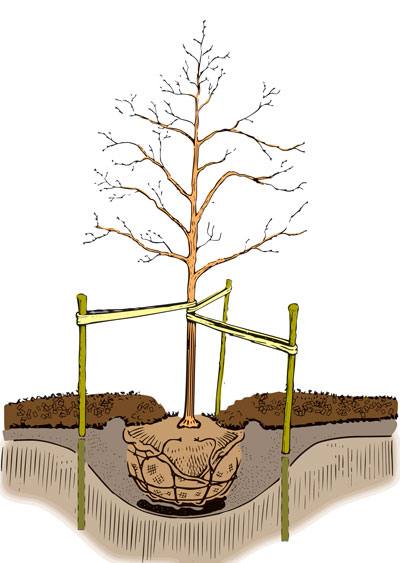
- Dig Wide, Not Deep: Dig your planting hole two to three times wider than the root ball or root spread, but only as deep as the distance from the exposed root flare to the bottom of the root system. Setting the tree on undisturbed soil prevents settling, ensuring the root flare stays flush with or slightly above the surrounding grade.
- Correct Surface Defects & Remove Packaging: Slice through any minor, fine outer circling roots. For balled-and-burlapped trees, set the tree in the hole first, then cut away and remove all twine, wire baskets, and burlap from at least the top half of the root ball. For bare-root trees, spread the roots outward horizontally across a mound of soil at the bottom of the hole.
- Backfill with Native Soil: Fill the hole using the original soil you dug out. Avoid adding rich soil amendments, compost, or potting mix directly to the hole; doing so encourages roots to stay trapped inside the amended zone rather than pushing into surrounding soil. Firm the soil gently with your hands as you fill to eliminate air pockets without compacting it.
- Avoid Mulch Volcanoes: Apply a 2- to 3-inch layer of organic wood mulch over the root zone to retain soil moisture and regulate temperature. Keep the mulch pulled back 2 to 3 inches away from the trunk. Piling mulch against the bark traps moisture, inviting wood rot, disease, and chewing rodents.
Step 4: Post-Planting Care & Maintenance
Once your tree is in the ground, your primary job is supporting it through its first two establishment seasons.
- Adopt a Deep Watering Schedule: Instead of frequent, light surface watering, give your new tree a slow, thorough soaking once or twice a week, adjusting for rainfall, soil conditions, and drainage. Thorough watering helps keep the developing root zone evenly moist as roots expand into the surrounding soil. Continue monitoring soil moisture through late autumn until the ground freezes.
- Hold Off on Heavy Pruning: Resist the urge to prune your new tree right away. Leave the healthy branches intact so the tree can use its leaves to generate energy. Limit early pruning strictly to removing branches that are dead, broken, or rubbing directly against one another.
This fall, choose one place in your landscape where a native tree can thrive. Match the tree to the site, plant it correctly, give it time to establish, and then register your new tree with Delaware’s Tree for Every Delawarean Initiative to help Delaware reach its goal of planting one million trees.
Learn More & Regional Resources
Explore these resources for more on native tree selection, planting guidance, climate resilience research, and opportunities to support Delaware’s tree canopy:
- Delaware Tree for Every Delawarean Initiative (TEDI): Register your newly planted native trees on the statewide tracking map and discover local planting grants
- Mt. Cuba Center Resilient Canopy Project: Access the complete regional climate-resiliency study and examine detailed projections for native trees in our area.
- ISA TreesAreGood Guidelines: Find certified arborists in your area and explore in-depth tree care brochures
- USDA Climate Change Tree Atlas: Explore interactive modeling tools mapping how tree habitats across the eastern United States are projected to shift over the coming century
- Food Deserts or Food Hubs: Take a look at the role of keystone species and the functional impact of suburban plant choices
- Beyond the Lawn: Examining the impact of Delaware’s fragmented habitats and the ways we can help to reconnect them.
0 Comments