When we think about coastal defense in Delaware, our minds often jump to the dramatic Atlantic shoreline. The towering sand dunes along Cape Henlopen and Rehoboth Beach stand as the state’s first line of defense against powerful ocean waves. If you missed our previous exploration of how wind, sand, and native beach grass work together to build these remarkable natural barriers, be sure to explore The Living Shoreline: Exploring the Ecology and Resilience of Delaware’s Sand Dunes.
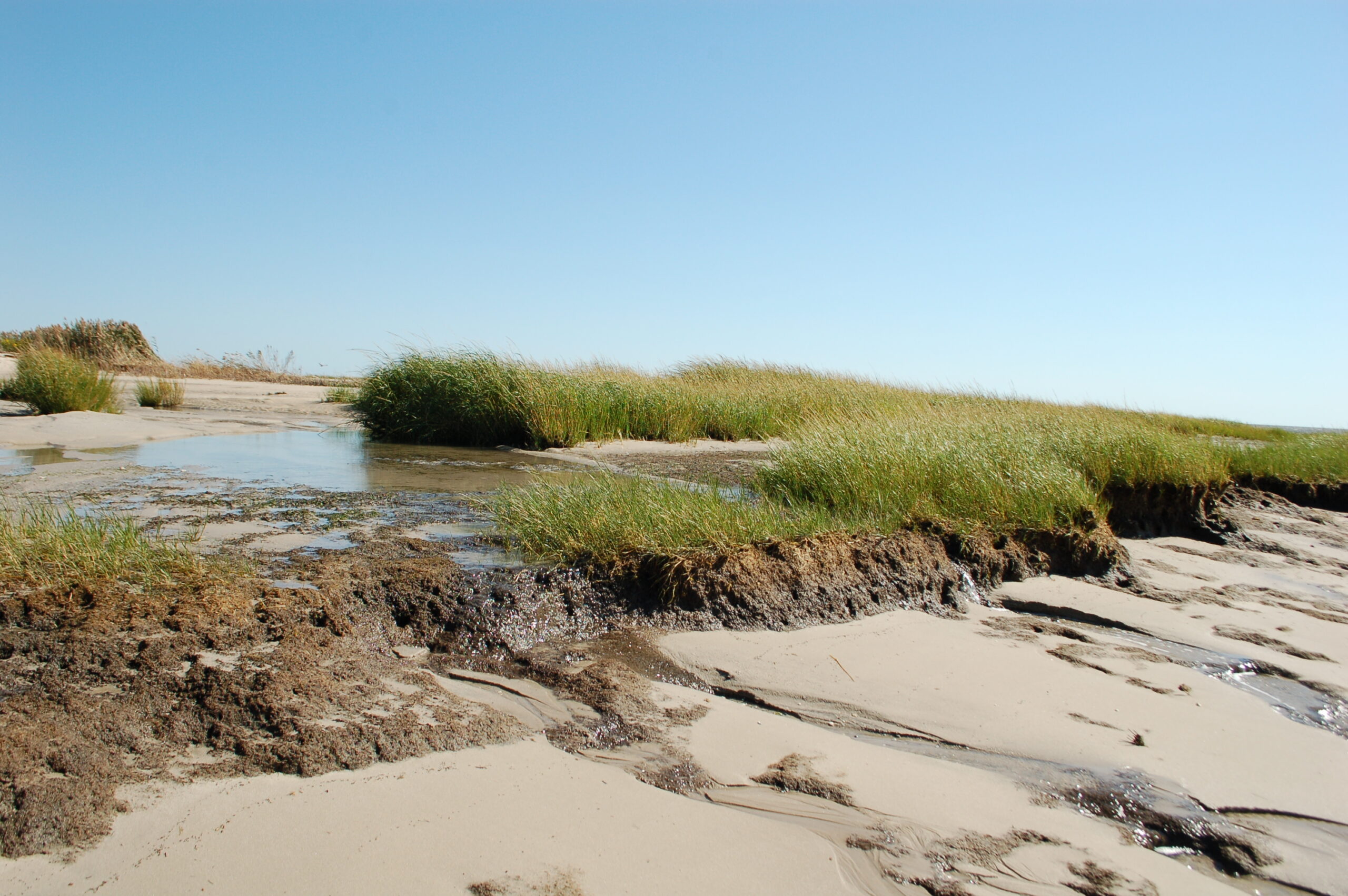
However, Delaware’s coastline extends far beyond the open ocean. Hundreds of miles of tidal marshes, quiet estuaries, inland bays, and winding creeks shape the First State’s landscape. These calmer waters face a quieter but equally important challenge. The Delaware Estuary, which includes Delaware’s tidal marshes and wetlands, is losing about one acre of tidal wetlands every day because of sea level rise, erosion, and coastal development.
For decades, the standard response to shoreline erosion was to install wooden bulkheads, stone riprap, or concrete walls. While these structures may temporarily hold back the water, they often disrupt natural shoreline processes and can even increase erosion nearby.
Today, Delaware is embracing a different approach through nature based engineering. Rather than fighting the water, living shorelines work with nature by combining native plants, oyster reefs, and biodegradable materials to reduce erosion, absorb wave energy, improve water quality, and create habitat for wildlife.
What Is a Living Shoreline?
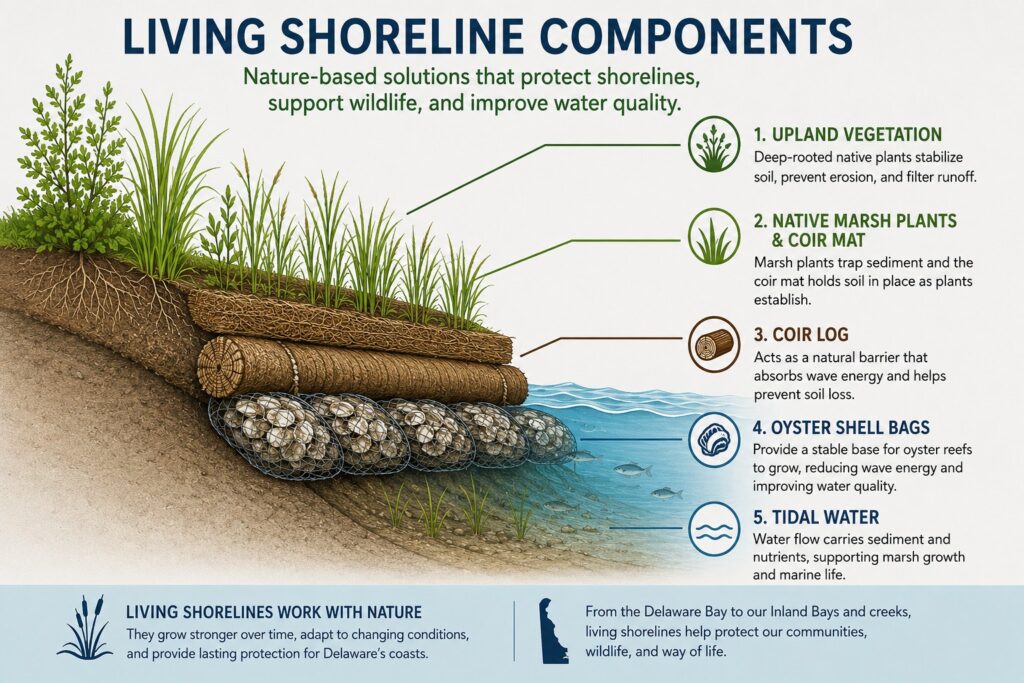
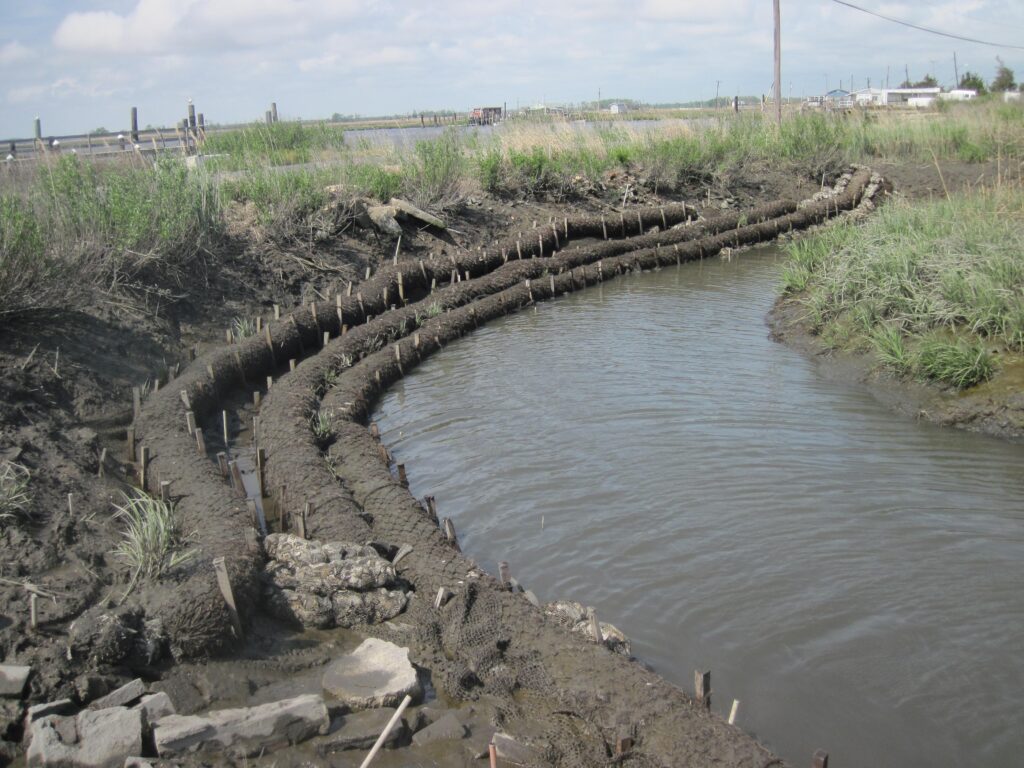
A living shoreline is a nature based shoreline stabilization technique that protects vulnerable coastlines while preserving the natural connection between land and water. Instead of replacing the shoreline with a rigid wall, restoration specialists install combinations of native wetland vegetation, coconut fiber coir logs, coir mats, and recycled oyster shell bags.
Traditional hardened shorelines create an abrupt edge between land and water. Instead of absorbing wave energy, they reflect it back into the channel, often scouring the riverbed and increasing erosion downstream.
Living shorelines behave very differently. Native vegetation slows incoming waves, oyster reefs help break up wave energy, and sediment naturally settles around the shoreline. Over time, these living systems continue growing, allowing them to adapt as environmental conditions change.
Delaware Innovation in Action
Delaware has been a leader in living shoreline restoration for nearly two decades.
Since 2008, when the Partnership for the Delaware Estuary launched its Delaware Estuary Living Shoreline Initiative, researchers, conservation organizations, state agencies, and local communities have been developing and refining living shoreline techniques throughout the state.
Today, these projects can be found at locations including the University of Delaware’s Lewes Campus, throughout the Inland Bays, and at numerous restoration sites managed by the Delaware Center for the Inland Bays and other conservation partners. What began as a series of pilot projects has become one of Delaware’s most effective strategies for protecting wetlands and strengthening coastal resilience.
The Power of Oysters and Native Vegetation
Living shorelines rely on native species to perform much of the engineering naturally.
Bivalves as Natural Breakwaters
Oysters and mussels do much more than reduce wave energy.
Recycled oyster shells provide the hard surface that young oyster larvae need to attach and grow into thriving reefs. A single adult oyster can filter up to 50 gallons of water each day, removing excess nutrients while improving water clarity and creating valuable nursery habitat for juvenile fish, crabs, and countless other marine species.
Delaware’s Role in a National Restoration Movement
Delaware’s oyster restoration efforts are part of a much larger movement demonstrating the power of shell recycling across America’s coastlines. Across the country, discarded restaurant oyster shells are being returned to coastal waters where they provide the foundation for new oyster reefs. These recycled shells develop natural biofilms that encourage young oysters to settle, allowing living reefs to grow while improving water quality, reducing wave energy, and restoring critical marine habitat.
The success of these programs reinforces an important lesson: sometimes nature’s best building material is one that can be reused again and again.
Rooted Anchors
Native wetland plants, particularly saltmarsh cordgrass (Spartina alterniflora), serve as another essential part of every living shoreline.
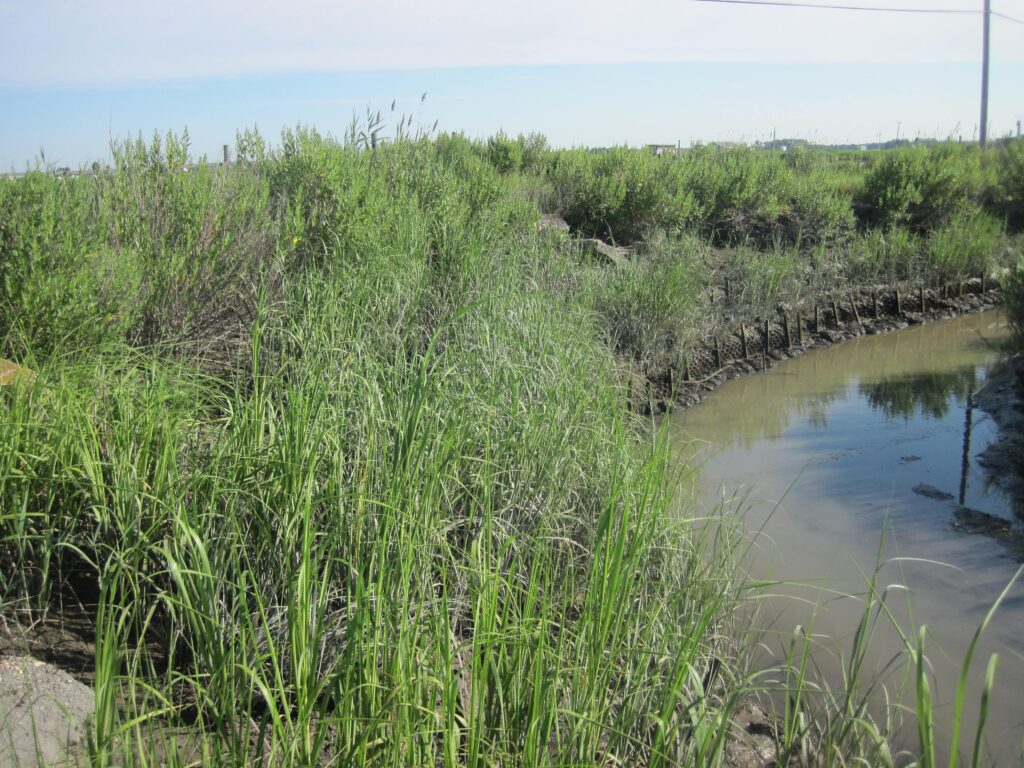
Their extensive root systems anchor marsh soils against constant tidal forces, while their stems slow incoming water just enough to trap sediment. As sediment accumulates, marshes gradually build elevation, helping them better withstand rising sea levels and ongoing erosion.
Healthy shorelines do not fight nature. They work with it. Living shorelines become stronger over time because the plants and oysters continue growing.
Before (Credit Josh Moody)After (Credit Josh Moody)
Protecting Delaware’s Waterways
Protecting Delaware’s coastline means looking beyond the state’s beaches.
From the tidal marshes of the Delaware Bay to the Inland Bays and quiet creeks that wind throughout the state, living shorelines help preserve the ecosystems that support wildlife, improve water quality, and make Delaware more resilient to a changing climate.
Whether you own waterfront property, enjoy kayaking Delaware’s waterways, or simply care about preserving our state’s natural heritage, living shorelines demonstrate how working with nature often provides the strongest and most sustainable solution.
To see these projects firsthand, explore A Tour of Living Shorelines in Delaware, an interactive StoryMap created by the Delaware Living Shorelines Committee in partnership with the Delaware Center for the Inland Bays.
This article draws from research conducted by the Delaware Living Shorelines Committee, the University of Delaware, DNREC, the Partnership for the Delaware Estuary, and national coastal restoration organizations.

0 Comments