
Beyond the Lawn in Post-War Delaware
In our previous post, we looked back at how centuries of shipbuilding, charcoal burning, and agriculture cleared roughly three-quarters of Delaware’s native forest canopy—and how working state forests like Redden and Blackbird are actively modeling large-scale restoration.
But when the second major landscape transformation hit after World War II, the threat to our forests changed shape. Farmland and woodlots didn’t just disappear; they were carved up into subdivisions, shopping centers, and manicured suburban turfgrass.
To heal our modern landscape, we have to look closely at what happened to our remaining trees—and why what looks green from the curb is often working against native wildlife.
The Illusion of Green: The Problem of Fragmentation Beyond the Lawn
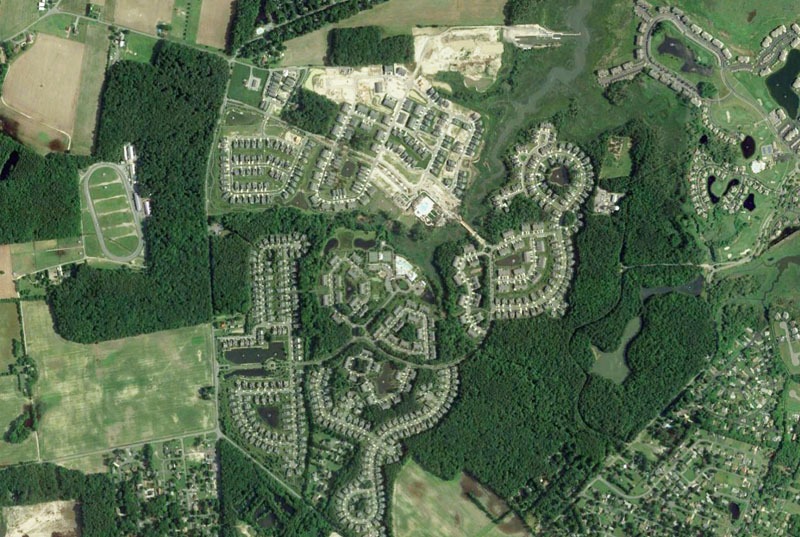
If you look at a satellite map of Delaware, you might still see plenty of green patches scattered across northern New Castle County or down through Sussex. But from an ecological perspective, not all green is created equal.
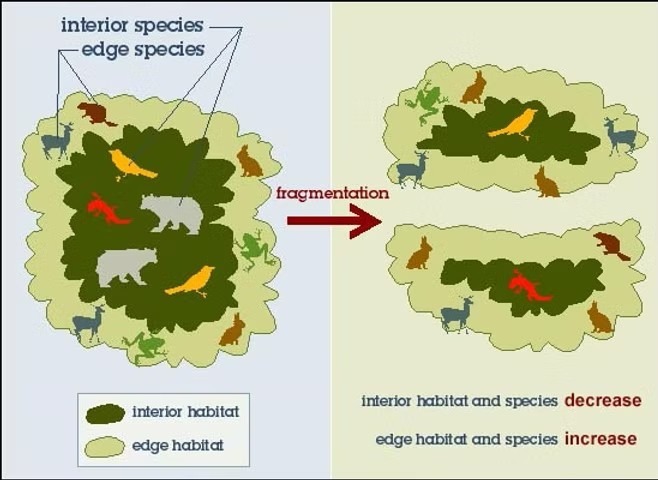
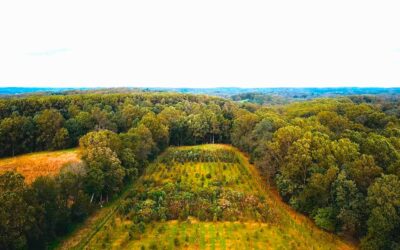
Where continuous forests once stretched for miles, our remaining canopy is now heavily fragmented into small, isolated woodlots separated by asphalt, power lines, and mowed lawns. This creates a severe issue known as the edge effect.
When a forest gets carved into small pieces, light, wind, heat, and invasive weeds penetrate deep into the interior. Sunlit edges favor generalist species, nest parasites like brown-headed cowbirds, and suburban predators. Meanwhile, interior habitat—the deep, cool, undisturbed core of a forest—shrinks or disappears entirely.
Wildlife on the Edge: Who We’re Losing
When interior forest disappears, the specialized wildlife that relies on it struggles to survive, even if a few tall trees remain standing in a neighborhood park:
- Deep-Forest Songbirds: Species like the Wood Thrush, Scarlet Tanager, and Ovenbird require large, connected blocks of undisturbed canopy to nest successfully. Along sunlit edges, their nests are easily spotted by predators or parasitized, causing breeding success to plummet.
- Amphibians & Reptiles: Species that depend on cool, damp leaf litter and shaded vernal pools, like spotted salamanders and wood frogs, find themselves trapped. Mowed lawns act as thermal barriers, drying out their skin and cutting off breeding routes.
- Box Turtles & Woodland Snakes: Box turtles and rat snakes need safe, wooded corridors to travel between wetland feeding grounds and upland nesting sites. A busy road or wide lawn becomes an impassable obstacle.
The Suburban Desert: Rethinking the Lawn Default
In suburban Delaware today, the cultural default is a broad, mowed turfgrass lawn accented by a few isolated, non-native ornamental trees.
While a neat lawn looks tidy, it functions ecologically as a biological desert. Turfgrass requires constant mowing, fertilizers, and supplementary water, yet its shallow roots cannot hold soil during heavy downpours, filter agricultural or street runoff, or support local food webs.
Most native songbirds cannot raise their young on seeds or feeder grain. They require thousands of native caterpillars per clutch. Standard suburban lawns and non-native ornamental trees host almost zero native insect larvae, effectively starving local bird populations even in neighborhoods filled with mature, non-native trees.
For ground-dwelling wildlife and migrating birds, a sea of manicured turf represents a massive wall of open, hostile territory.
Your Yard as a Stepping-Stone Corridor
Here is the good news: we don’t need to acquire thousands of acres of public wilderness to start fixing forest fragmentation.
Because roughly four out of every five acres of Delaware’s forest land is privately owned, private property owners hold immense power to bridge the gap. This is where the Homegrown National Park framework comes into play.
By intentionally shrinking our lawns and replacing underutilized turf with native canopy trees, understory shrubs, and layered groundcovers, we can transform isolated yards into vital stepping-stone habitats.
When one homeowner replaces a sterile lawn strip with a native white oak and an understory of native viburnums, it creates a localized shelter. When three neighbors on a block do it, that block becomes a functional wildlife corridor connecting two larger woodlots.
Looking Beyond the Lawn
Rebuilding a resilient canopy isn’t just about saving deep-woods wildlife; it’s about building natural infrastructure that cools our streets, absorbs floodwaters, and improves public health right where we live.
In our final post of this series, we will look at how Delaware is scaling this movement through the Tree for Every Delawarean Initiative (TEDI), explore major statewide restoration milestones, and examine how native trees function as living, municipal engineering.
Learn More & Take Action
- Habitat Condition & Conservation: Review the state report on native habitat health, fragmentation, and wildlife threats through DNREC.
- Delaware Forest Resource Assessment: Explore detailed inventory data on state forest cover and regional canopy trends via the Delaware Forest Service.
- Wood Thrush Conservation: Learn about deep-forest songbird nesting needs and edge-effect impacts through the Delaware Nature Society.
- Vernal Pools at Risk: Read how fragmented woodlands impact seasonal breeding pools for native salamanders and frogs at Delaware Naturally.
- Food Deserts or Food Hubs: Discover how native plants function as critical food hubs for local wildlife at Delaware Naturally.
- Map Your Impact: Learn how to shrink your lawn and add your property to the national conservation map at Homegrown National Park.
- Stay Informed: Subscribe to the Delaware Naturally Newsletter to follow the rest of this series and get our latest updates delivered right to your inbox.
0 Comments