
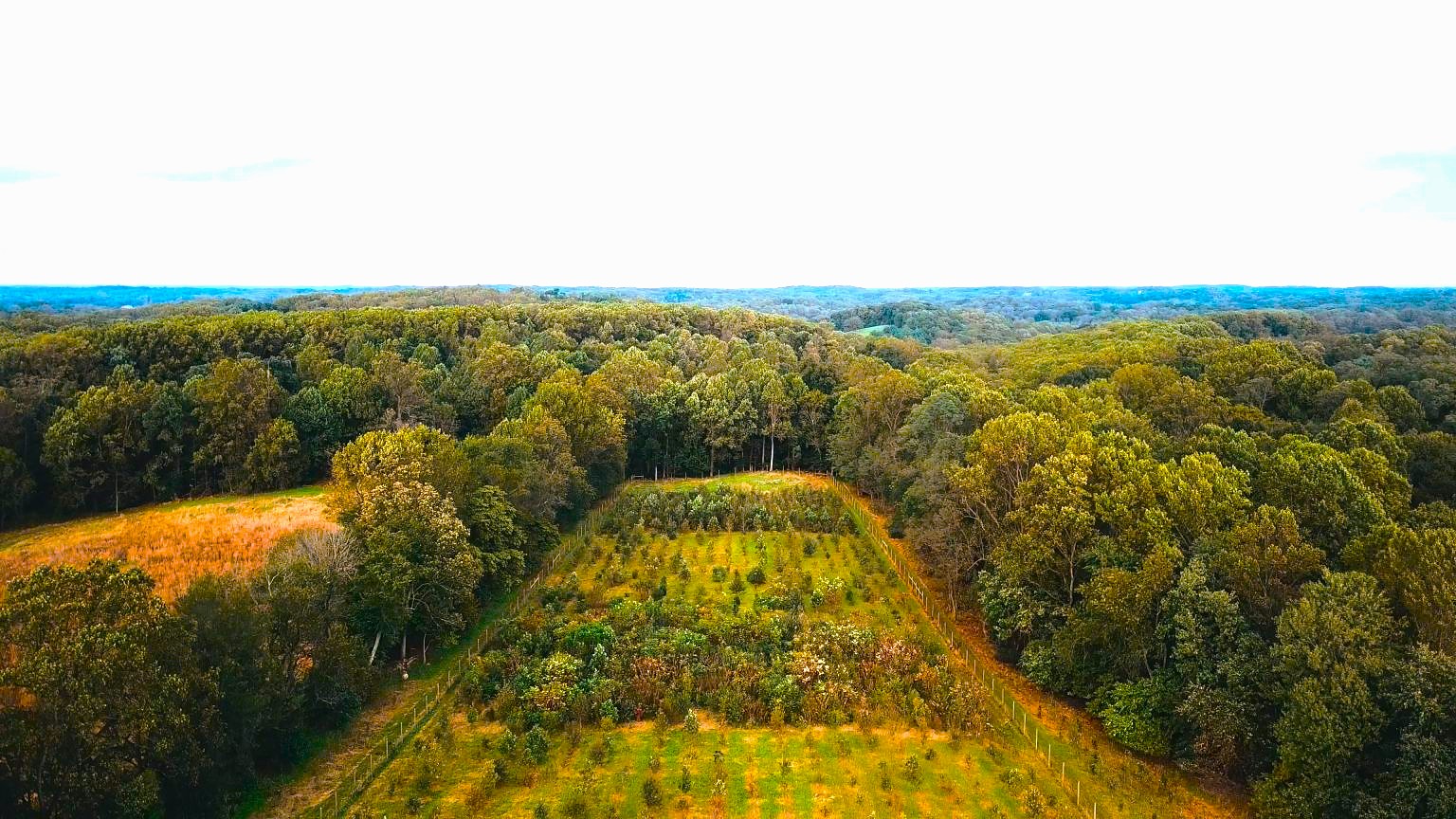
Restoring Delaware’s Tree Infrastructure One Tree at a Time
From the loss of primeval old-growth stands to the suburban subdivisions that fragmented what remained, Delaware’s forest canopy has endured centuries of heavy pressure.
While our three state forests serve as vital laboratories and working models for canopy restoration, the vast majority of Delaware’s wooded land is in private hands. Protected public lands cannot carry the burden of stormwater management, heat mitigation, and biodiversity recovery on their own. The places where we live, work, and play must actively contribute.
Fortunately, a steady, landscape-scale comeback is proving that when communities, state agencies, and private landowners work together, healing our broken canopy is well within reach.
Crossing the Halfway Mark: 500,000 Trees
Back in June, Delaware reached a quiet but monumental milestone in its canopy recovery efforts: across the state, partners and property owners have planted more than 500,000 native trees.
This effort is driven by the Tree for Every Delawarean Initiative, an ambitious statewide effort targeting one million native trees planted by 2030. Crossing the halfway mark proves this isn’t just an abstract conservation goal, it is real work getting done on the ground in every county.
No single entity plants half a million trees alone. The effort relies on a network of non-profits, school districts, municipalities, faith communities, local conservation districts, and thousands of individual homeowners.
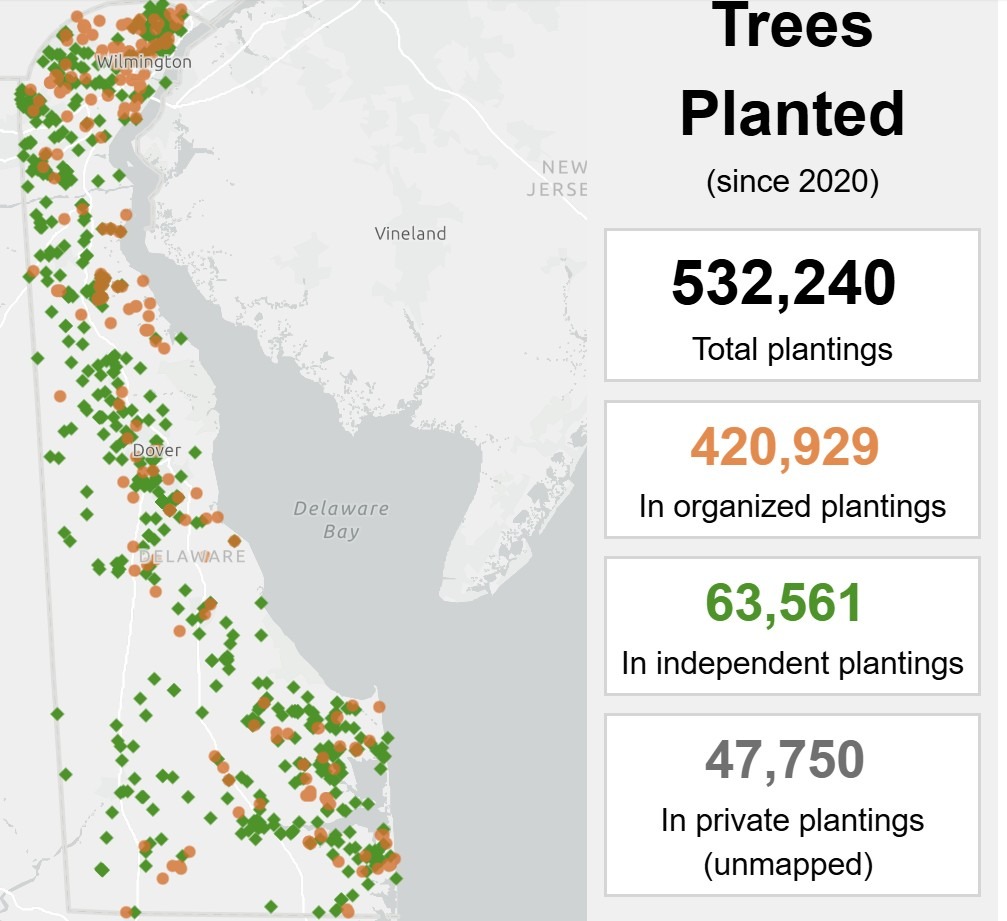
On the ground, this collective work is already restoring critical habitats:
- Floodplain Restoration: At places like the Ashland Nature Center along Red Clay Creek, new native canopy is stabilizing stream banks, trapping sediment, and cooling aquatic habitats.
- Swamp Forest Recovery: At Abbott’s Mill Nature Center, foresters are actively re-establishing rare native Atlantic White-cedar wetlands across southern lowlands.
- Riparian Buffer & Emerald Ash Borer Recovery: At Mt. Cuba Center, conservationists used TEDI grant funding to restore four acres of Red Clay Creek riparian buffer degraded by the invasive emerald ash borer, planting nearly 1,500 native trees across 11 species to shade streams, reduce erosion, and feed local wildlife.
Trees as Living Engineering
Rebuilding tree canopy across our towns and neighborhoods isn’t just an aesthetic upgrade; it is a direct investment in natural infrastructure. A mature forest canopy functions like a self-maintaining utility system, delivering benefits that concrete and storm pipes simply cannot replicate.
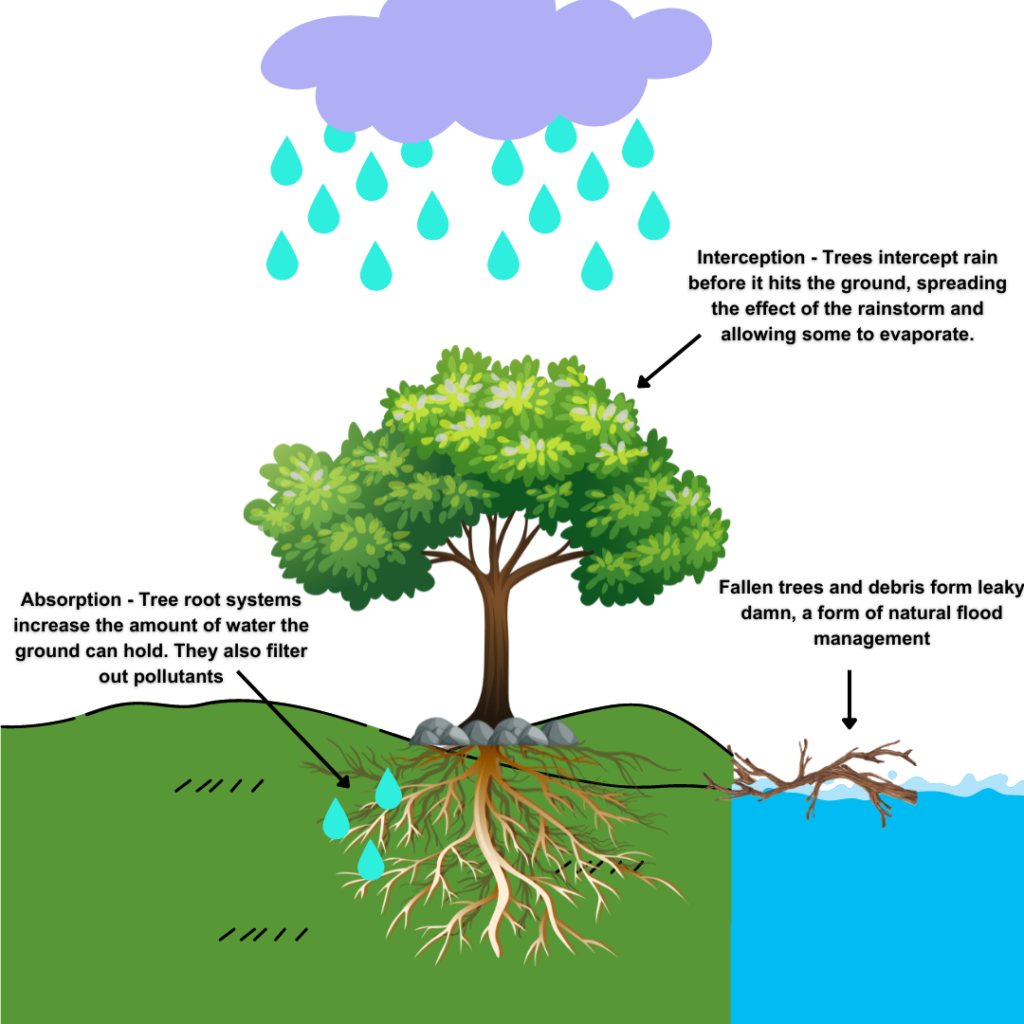
- Stormwater & Flood Absorption: A dense tree canopy acts as a giant sponge. Leaves and branches intercept heavy rain, breaking its force, while deep root systems open up compacted soil to store vast amounts of water. By slowing runoff before it surges into storm drains, trees reduce local flooding and lower municipal water treatment costs.
- Microclimate Cooling: Asphalt, rooftops, and unshaded pavement absorb solar heat all day, baking neighborhoods and driving up summer energy demands. Strategic tree cover creates deep shade and cools the surrounding air through evapotranspiration, providing vital relief during extreme heat waves.
In densely built areas, unshaded asphalt surfaces can reach temperatures up to 30–45°F higher than the surrounding air. A healthy mature canopy acts as a natural air conditioner, lowering localized ambient temperatures by several degrees and reducing air conditioning demands on nearby buildings.
- Community Resilience: Tree-lined streets encourage walking, improve air quality, and bring lasting stability and value to local neighborhoods.
Rebuilding Canopy Is a Mass Participation Project
Rebuilding Delaware’s canopy is not a project with a single end date, nor is it a job for state agencies alone. As we work toward the second half of our one-million-tree goal, private property owners will continue to play the starring role in stitching our forest infrastructure back together.
Every native tree planted on private ground helps bridge a gap, absorb stormwater, and restore life to a piece of our shared landscape. By connecting large-scale public conservation with intentional stewardship in our own yards, we can ensure Delaware’s future remains cooler, healthier, and wilder for generations to come.
Learn More & Take Action
- TEDI Program Portal & Tracker: Explore grant resources, tree selection guides, and log your plantings on the official state tracker at de.gov/tedi.
- Heat Island Science: Learn how urban canopy cools neighborhoods via the U.S. EPA Heat Island Reduction Program
- Delaware Forest Service Urban & Community Forestry: Access technical support and community grants through the Delaware Forest Service Education Portal
- Homegrown National Park: Find practical resources for shrinking lawns and adding native habitat on private property through Homegrown National Park
- Stay Informed: Subscribe to the Delaware Naturally Newsletter to get our latest environmental stories and conservation updates delivered straight to your inbox.
0 Comments